I have written before on munchkins, the ardent doers of this world. For the full version, see the conclusion of my essay on Bishop's Castle, but here’s a summary:
There’s a certain type of human whose very being is pure act. They appear to their fellows as a whirlwind. If you know someone who always seems to have a project, has concrete and tightly-held ideals, and in particular seems to have an indomitable force of will, then you likely know a munchkin.
Munchkins are the most innovative people in their society. A smart society makes itself into a munchkin preserve, allowing munchkins to endeavor with minimal interference from us mere mortals.
I love munchkinry and consider it an expression of God’s influence. But I’ve always been confused by how often it’s opposed. Take Jim Bishop. His castle hurts no one and helps the economy of a poor region of Colorado. Yet Bishop had to fight like a cornered marmot to preserve it. The castle sustained siege after siege by regulator-gheists, ne’er do wells, and finger-waggers. It is always bizarre to see those who oppose for the mere sake of opposition. Sam Altman put it this way: “a surprising number of people will be offended that you choose to work hard.”
Yes, some people are offended by hard, frenzied work. These people are of course the natural enemy of the munchkin, as old and as powerful as munchkins themselves. They prey on munchkin flesh, their goal being to drive them to cynicism and turn them into one of their own.
These people, these wretched antis-of-everything, are snivelers.
Snivelers cannot act; they can only sneer and jeer at the munchkins as they do their work. In your own life, you’ve probably known someone who gets a sick kick out of killing ideas. Most people have a sniveler in their lives.
Theodore Roosevelt warned us about snivelers in his 1910 speech at the Sorbonne:
“There is no more unhealthy being, no man less worthy of respect, than he who either really holds, or feigns to hold, an attitude of sneering disbelief toward all that is great and lofty, whether in achievement or in that noble effort which, even if it fails, comes second to achievement. A cynical habit of thought and speech, a readiness to criticise work which the critic himself never tries to perform, an intellectual aloofness which will not accept contact with life's realities—all these are marks… of weakness. "
Roosevelt, as an ultramunchkin, had to deal with armies of snivelers and knew them well. Pay close attention to his words here, as he distinguishes between snivelers and mere critics. Criticism to course-correct is valuable. It only turns sniveling when it becomes “a cynical habit” and a kneejerk response. Criticism should be a short and well-placed kick, not a resting place. The sniveler distorts this by making criticism a way of life. They aim not to redirect but to block and destroy.
The most obvious difference is that snivelers can’t build anything themselves. If a munchkin criticizes a rival and tries to build differently, they may very well have a point. But a sniveler never builds after criticism. They sneer out of pure habit.
There are certain categories of criticism that only make sense from the perspective of a sniveler, and therefore when you hear them you can assume a sniveler made them. My “favorite” is when somebody argues that people shouldn’t work on spaceflight, they should instead work on [INSERT SNIVELER’S PET PROJECT HERE]. It takes a special kind of arrogance to say “how stupid of you to work on your interest, you should be working on my interest!” Usually, such people aren’t even working on whatever pet project they advocate for. They just wear support for it as a talisman to add an air of superiority to their sniveling. They ignore the fact that spaceflight has resulted in innovations that improve every field of human endeavor. It’s rare for great work to block other great work; great work usually compounds on itself in a consilient way.
Snivelers are found in every social class and community, but you won’t see them working in every job. They can’t cut it in many occupations. Engineering, the trades, sports, and art are all Hades for a sniveler. They want a job that allows them to get in other people’s way. This makes them natural-born pencil-pushers and bureaucrats. Not all bureaucrats are snivelers, but a majority of snivelers are either bureaucrats or a certain kind of journalist.
The Difference Between Munchkinry and Snivelry
To paint the eternal opposition between the munchkin and the sniveler, here’s a table of contrasts:
| Category | Munchkins | Snivelers |
|---|---|---|
| Default Action | Doing | Talking |
| Default Assumption | It will work or at least that it's worth trying | It won't work, it's not worth trying |
| Do they have ideals? | Yes | No (Usually nihilist or deeply relativist) |
| Driving Emotion | Love | Envy |
| Default Saying | "Why not?" | "Why?" |
| Sees life as an... | Adventure | Obligation |
Examples of Munchkins and Snivelers
It’s easy to name munchkins Benjamin Franklin, Thomas Edison, and Nikola Tesla were all munchkins. So were Emmy Noether, Jim Bishop, Robin Lee Graham, Steve Jobs, ZUN, and Brian Chen. There have been millions of nonfamous ones. Naming snivelers from the past is harder because they rarely change the world or become famous. But it’s not uncommon to read about them in passing in the biographies of famous munchkins. The old-fogey politicians who jeered at Roosevelt during his first entrance at the New York State legislature provide a representative example:
Other, more bitter epithets were to follow in the months ahead, as Roosevelt proved himself to be something of an angrily buzzing fly in the Republican ointment: “Young Squirt,” “Weakling,” “ Punkin-Lily,” and “Jane-Dandy” were some of the milder ones. “He is just a damn fool” growled old Tom Alvord, who had been Speaker of the House the day Roosevelt was born. Nominated again for Speaker that night, Alvord cynically assessed Republican strength in the House as ‘sixty and one-half members.’ The Rise of Theodore Roosevelt by Edmund Morris, Chapter 6 page 162.
The Republican veterans showed a strong first instinct to insult and dismiss, the mark of a true sniveler.
The most famous example of another archetype, the sniveler-journalist, is the anonymous author of the infamous New York Times article Flying Machines Which do not Fly. I’ll analyze this article and point out a few features that make it an example of snivelry. First, a bit of background.
The article was published on October 9, 1903, and reported on the failed flight of Samuel Langley’s Aerodrome two days earlier. The Aerodrome was a tandem-wing flying machine typical of its era, but, by 1903 it had already achieved atypical results. In 1896, Aerodrome no. 5 became the first successful flight of an unpiloted, engine-driven, heavier-than-air craft in history (Langley Aerodrome A | National Air and Space Museum). Spurred on by this success, Langley felt that the ancient dream of human-carrying flying machines was within his reach. He proposed to do this by scaling up his model, and the U.S. government granted his funding application. Serious work on the scaled-up Aerodrome began in 1898.1.
After five years of construction, the machine was ready for launch.It was set up with a catapult track to launch it down the hill and over the Potomac for a hopefully safe landing in the water. Herds of reporters stood and adjusted their cameras, and at the firing of a gun, the lock withdrew and the flier swooped through its track.
I’ll let our anonymous sniveler describe what happened next:
At the supreme moment the device was shot down the incline from which it was to derive, by gravity, its initial momentum. When the instant came when it was to defy gravity it behaved very much like a card skillfully scaled by an expert. But for its wings and aeroplanes it would have dropped from the end of the shoot by a very short trajectory, upon whatever might have been under it. As it was, it described a relatively long and very graceful trajectory, the chord of which was about a hundred yards, and when its impetus was exhausted gradually curved downward until it disappeared, “plunk,” as the small boy would say, into the river… The proverbial proneness of the unexpected to happen, especially in the case of flying machines, has been demonstrated too often since the days of Icarus to leave room for surprise that gravity was too much for the Langley mechanism.”
Aviation historians have blamed the Aerodrome’s failure on its poor construction and inadequate control system. This wouldn’t be revised until the Wright Brothers implemented ailerons later the next year.
Criticizing the flier is not what makes this article an example of snivelry. However the reporter’s mistake, for which he has been rightly ridiculed for over a century, is to jump to the conclusion that it’s worthless to even try to build a flying machine.
Our author wrongly blames production imperfections for the failure: “The difficulty probably resided in the fact that the apparatus was not made just as it was calculated, … considering the limitations of the mechanic arts and the variableness of materials.” He goes on to say that since it took evolution “many generations” to produce flying birds, it would take humans more than one million years to achieve the same:
“Hence, if it requires, say, a thousand years to fit for easy flight a bird which started with rudimentary wings… it might be assumed that the flying machine which will really fly might be evolved by the combined and contiguous efforts of mathematicians and mechanicians in from one million to ten million years… to the ordinary man it would seem as if effort might be employed more profitably.”
A million years! The Kitty Hawk flew two months later.
Here we see the common refrain of snivelers: “it’ll never work, better to work on something else.” Their justifications are usually flimsy, but in their thinness is comical. It is clear that the author of this piece really didn’t know anything about the history of invention, so I should cut him some slack for the factual errors… but it’s the purpose of the thing. He really wanted to say it would never work, and grasped at the nearest straw to justify that. That’s what makes this snivelry.
How do you deal with people like this?
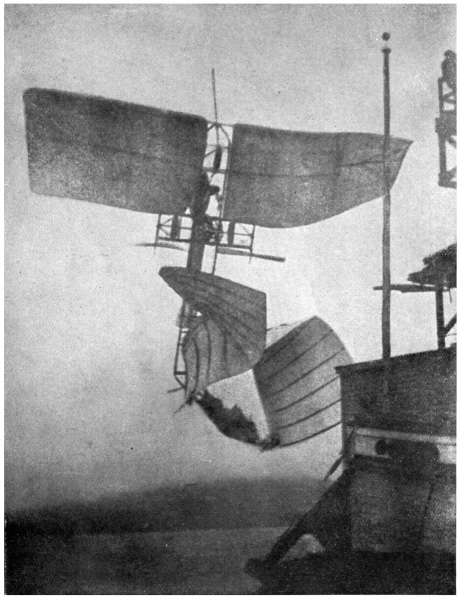
The second, later failure of the manned Aerodrome in December 1903. It buckled in on itself after launch.
How to Deal with Snivelers
It’s tempting to fight back against the sniveler, to say, “Yes, I can!” This is exactly what the sniveler wants since they can still suck energy out of you in this way; it also distracts you from the true munchkin’s purpose of doing. Your life should be at all times fixed on a higher purpose; at all times directed toward action, not toward appeasing and striking back at snivelers. Of course, sometimes the snivelers leave you with no choice but to fight back: if you don’t, they’ll stop you in your tracks. This was Bishop’s experience with his castle. But, as always, fighting back must be the last-resort solution.
The best way to deal with Snivelers is to ignore them. Snivelers can’t generate their own energy, only suck it away from other people. When deprived of energy to feed on, they slink away. One can deal with their inner sniveler in the same way. By ignoring it, it will slowly shrivel up, and time by time it may shrink into negligibility. Maybe this is how munchkins are made.
Munchkinry and Snivelry: an Inner Battle
We must clarify that, while munchkinry and snivelry are in eternal opposition, they aren’t a switch but two ends of a continuum. These two wolves battle inside us all, and the dominant wolf makes one person a munchkin and another person a sniveler. Those I call “munchkins” are the rare few among us who are 95% munchkin and < 5% sniveler. Being a sniveler is easier and so there are more of them, but they are still a small minority of the population. Most of us are in the muddy middle.
That part of each person that generates their ideas, the initial spark of inspiration, joy, and love, that hooks them into life and draws them to action; that is their muchkinness. The part that tries to block munchkinness, the par that says, “you can’t”, “you’re not good enough”, “tomorrow”, “maybe someday.” That’s the sniveler inside us all.
Conclusion
Munchkins work for action, snivelers for inaction. . Munchkins are good but The Good encompasses more than mere munchkinry; for example, loving caregivers are good but usually aren’t munchkins.. Snivelers are evil but Evil encompasses more than mere snivelry, as some people use their creative powers for evil.
Munchkinry and snivelry are forces battling inside of us, when we feed one to the exclusion of the other, we become a munchkin or sniveler. You should avoid snivelers and hang around munchkins as much as possible if you want to be creative, and of course, you must avoid becoming a sniveler yourself.
I mentioned in Bishop’s Castle that America used to be a munchkinland. That’s because, in its early days, America attracted munchkins as immigrants. This still happens, though many natural-born and immigrant Americans are no longer very munchkiny. We could recreate munchkinland by having enough munchkins gather together in a single place.
Now that would be a place I’d love to visit.
Appendix:
Glossary of Munchkinry and Snivelry
Munchkins – The zealous creatives of the world; those who dedicate their lives to building new things.
Munchkinry – The general force of munchkins in the world.
Munchkiny – The state of being, or being similar to, a munchkin.
Munchkinland – A hypothetical state or community that is particular hospitable for munchkins.
Snivelers – People who make a lifestyle out of useless complains and criticisms, that feed their ego. They try to stop whatever the munchkins are doing. The opposite of munchkins.
Snivelry – The general force of snivelers in the world
Snively – The state of being, or being similar to, a sniveler
Flying Machines Which do Not Fly
I’ve had a lot of trouble finding the full transcribed text of the article online, so here it is for your viewing pleasure.
The ridiculous fiasco which attended the attempt at aerial navigation in the Langley flying machine was not unexpected, unless possibly by the distinguished Secretary of the Smithsonian Institution, who devised it, and his assistants. Prof. MANLY, who undertook the voyage, prudently clothed himself in a cork jacket—doubtless because cork is a good non-conductor and would tend to keep the wearer warm in the rarefied strata of the upper atmosphere in which he perhaps expected to cruise. However, as the machine was to be launched over the Potomac, it appears, as matters eventuated, to have been a wise precaution for other reasons. At the supreme moment the device was shot down the incline from which it was to derive, by gravity, its initial momentum. When the instant came when it was to defy gravity it behaved very much like a card skillfully scaled by an expert. But for its wings and aeroplanes it would have dropped from the end of the shoot by a very short trajectory, upon whatever might have been under it. As it was, it described a relatively long and very graceful trajectory, the chord of which was about a hundred yards, and when its impetus was exhausted gradually curved downward until it disappeared, “plunk,” as the small boy would say, into the river. Thanks to his cork jacket, Prof. MANLY came to the surface thoroughly wet, but smiling, explanatory, and delightfully confident that the principle of the Langley device is all right, and eager to make a report to this effect to his principal, who had prudently remained in Washington. The proverbial proneness of the unexpected to happen, especially in the case of flying machines, has been demonstrated too often since the days of Icarus to leave room for surprise that gravity was too much for the Langley mechanism. That it ought to fly as well as the average hen hawk is probably true; but Prof. LANGLEY and his assistants are very learned men. Not one of them is an empiric in science or in the least hazy as to exact mathematics. They have undoubtedly worked out the equations of levitation, so to speak, with infinite patience and infallible exactness. The difficulty probably resided in the fact that the apparatus was not made just as it was calculated, and considering the limitations of the mechanic arts and the variableness of materials, this always comes between the mathematician and the expression of his results in wood, iron, and canvas, or whatever is employed in construction. In most things the variation permissible from plans and calculations is not fatal to utility, and in any other form of flying machine than a balloon the least margin of variation permissible in exact mechanics is probably much too wide to warrant the expectation that the results sought will be attained. Nature is more successful in applying the law of compensations to the correction of errors of design or development than man has ever been or is ever likely to be. The bird which cannot fly at all, or not very well, usually does not need to; but if the time ever comes when it does need to, its differentiation is gradually but certainly effected along natural lines. It should be remembered, however, that the bird successful in flight is an evolution. It has taken a great many generations of his kind to develop his muscular system in just the right way for flying purposes, and very likely the process has consumed many centuries of time. The mistake of the scientist would appear to be in his assumption that he can do with much less suitable material by a single act of creative genius what nature accomplishes with such immeasurable deliberation. It may also be that he has failed to recognize the difference between matter which is passive and must be differentiated and matter which may be said to co-operate with the creative purpose and to assist the process of differentiation by effort. The bird that wants to fly and feels the need of flight tries to fly, and keeps on trying until it can fly as well as it needs to. The machine does only what it must do in obedience to natural laws acting on passive matter. Hence, if it requires, say, a thousand years to fit for easy flight a bird which started with rudimentary wings, or ten thousand for one which started with no wings at all and had to sprout them ab initio, it might be assumed that the flying machine which will really fly might be evolved by the combined and contiguous efforts of mathematicians and mechanicians in from one million to ten million years—provided, of course, we can meanwhile eliminate such little drawbacks and embarrassments as the existing relation between weight and strength in inorganic materials. No doubt the problem has attractions for those it interests, but to the ordinary man it would seem as if effort might be employed more profitably.
Special thanks to James Brobin for essay feedback and Jan Mathys for art direction.
